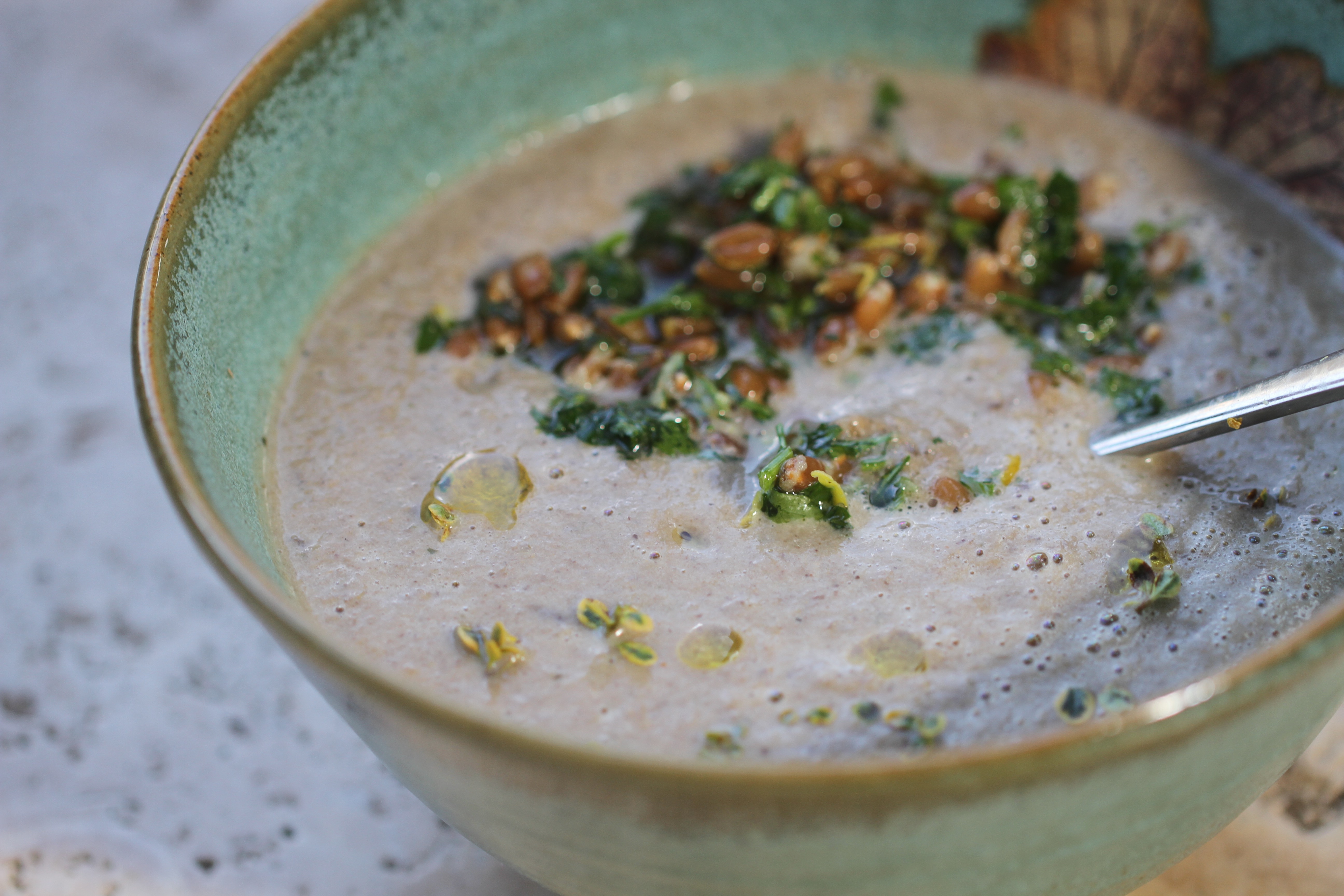
A few years ago I spent the summer in Austria. The pickings in the woods there were just incredible. As long as you went for a walk with a beady eye and a lot of patience, you could be rewarded by intensely flavoured mountain strawberries and raspberries, wild bilberries and a plethora of mushrooms. I had never been brave enough to pick mushrooms in the wild at home, but my Austrian hosts were so knowledgable about their local landscape and natural produce, that we spent several long afternoons enjoying the alpine sunshine and searching for ingredients for our supper. They were some of the tastiest things I’d ever eaten, and when I returned home I committed to learning more about our own British varieties so that I could collect them safely and responsibly here.
It almost goes without saying that it’s a very, very bad idea to go mushroom foraging if you don’t know your Wood Ears from your Panther Caps, not only because you could make yourself very poorly indeed, but because over-picking could easily damage a delicate eco-system.
Allow me to get my nerd on for a moment, as mushrooms are fascinating and beautiful things (if you don’t believe me you should watch a slow-motion video of a mushroom releasing its spores or Google beautiful mushroom images). Neither plants nor animals, fungi occupy their very own Kingdom, and a recent study found more than 45,000 fungal species. Only a small proportion of these are edible however, and most of these are considered to be either saprotrophic or mycorrhizal.
Saprotrophic mushrooms are decomposers and feed on decaying matter. They release acids and enzymes to break down dead tissue, and are responsible for recycling much of the world’s dead matter into compost and soil. Culinary varieties include shiitake, oyster, button and giant puffball. As they are relatively easy to cultivate they tend to be the more widely available (and cheaper) options in the market.
Some fungi however have a much more intriguing and delightful life cycle. These are known as mycorrhizal fungi. Rather than feeding off decaying matter they live in an intimate symbiotic relationship with the living roots of a plant or tree, which is mutually beneficially for both mushroom and host. The mycelia (think complex mushroom-y roots) of these fungi draw in moisture and phosphorous into the plant’s roots, which allows them to grow bigger and stronger, faster. (This is why a lot of gardeners sprinkle specially cultivated mycorrhizal fungi onto bare root trees and rose bushes before planting them.) In return the fungi receive access to sugars that the host produces. Culinary varieties include truffles, chanterelles and porcini. Because of their complex life cycle it is very difficult to artificially cultivate these varieties, and so they are often the most highly prized, ‘gourmet’ mushrooms.
And in case you didn’t that was amazing enough, here’s a fun fact from the Kew Gardens website: ‘It is estimated that as many as 90% of all plants depend on mycorrhizae to survive, and mycorrhizae probably enabled plants to colonise land around 450 million years ago.’ Something to think about the next time you’re tucking into a bowl of risotto.
But enough science, and on to the recipe!
When I get my hands on some really good will mushrooms, I just can’t resist the classic combinations. For me, mushrooms and thyme is a match made in heaven, and I just have to throw a little truffle in there to take me to a place of real delight! This soup is sweet, earthy and woodsy, and let’s these little mushrooms truly take centre stage. The addition of the Noix de la Saint Jean (a fortified wine made with green walnuts) was a happy accident as it was just what I had to hand, but it really does add an extra layer of flavour. A good sherry would also work perfectly. The addition of spelt in the gremolata adds nuttiness and bite, and turns the soup into a more substantial meal, although if you don’t have time to cook the grains, feel free to omit them – just add the lemon zest and parsley straight to the soup before serving.


Ingredients
For the Soup:
2 onions
2 cloves of garlic
A large bunch of thyme, leaves stripped
A good splash of Noix de la Saint Jean (or Fino Sherry)
300g wild mushrooms (I used a mixture of St George’s, Chanterelles and Blewits)
800ml good quality vegetable or chicken stock
1 tbsp Mascarpone
A drizzle of truffle oil
For the Gremolata:
Zest of 1 lemon
A small handful of parsley
A cup of spelt
Method
- Start by adding the spelt berries to a pan of salted poling water and cook until tender. This should take about an hour. When they are ready, drain and set aside to cool.
- Finely dice the onions and add to a large pan with a generous knob of butter. (Adding a splash of vegetable oil here will prevent the butter from burning.) Sweat over a very low heat until the onions are soft but have not coloured.
- Crush the garlic cloves into the pan and add the thyme leaves. Cook for just a few minutes
- Turn up the heat and add a generous glug of Noix de la Saint Jean (or Fino Sherry) to the pan. Let it bubble furiously for a moment, before adding the mushrooms and the vegetable (or chicken) stock. Turn down the heat and allow to simmer for fifteen minutes.
- To make the gremolata add the zest of 1 lemon and juice of half a lemon to the spelt. Add the chopped parsley, salt and pepper, and stir to combine.
- Remove the soup from the heat, add the mascarpone, and blitz with a stick blender until velvety.
- Serve the soup with a spoonful of gremolata and a drizzle of truffle oil.